
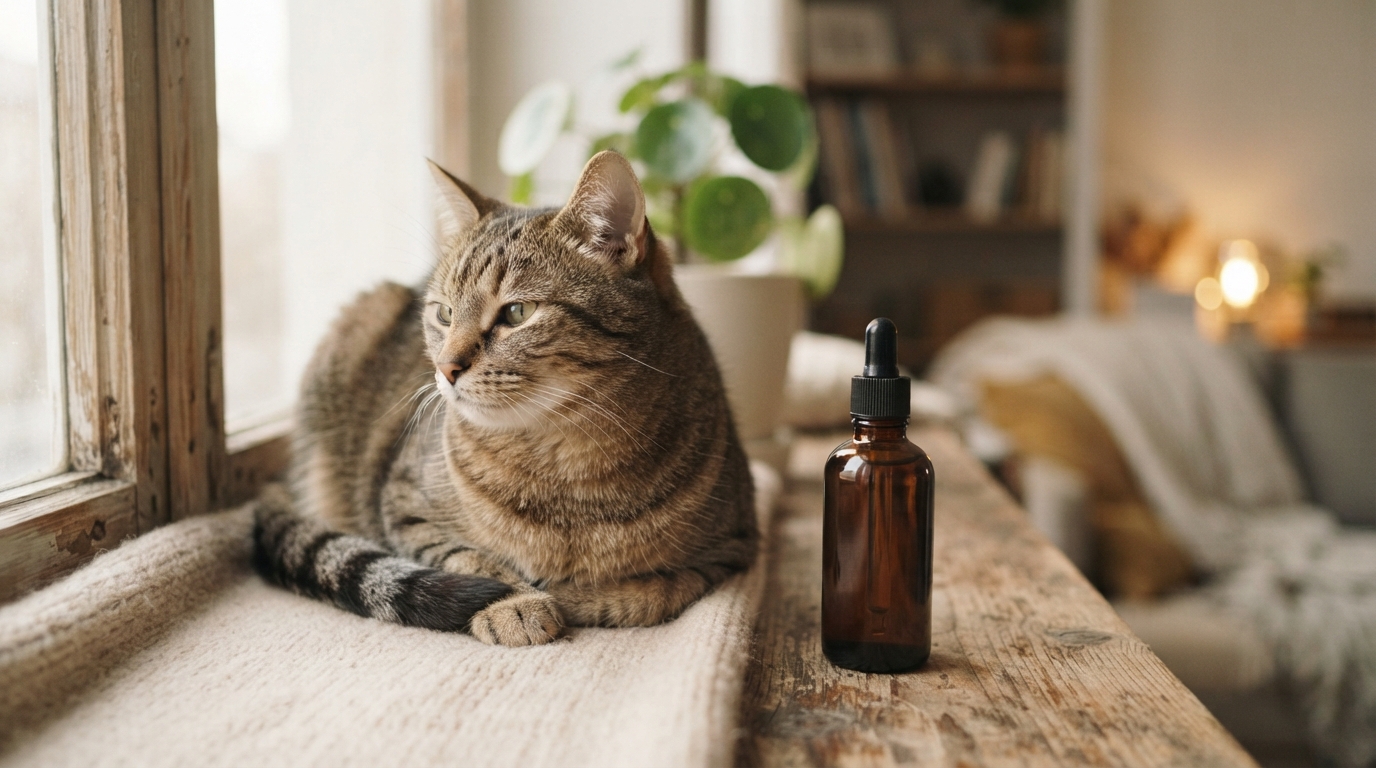
Not all bottles labeled “CBD” contain what the label claims. Independent lab testing of hemp products sold for pets has repeatedly turned up mismatches between stated and actual cannabinoid content, along with occasional THC levels above the legal 0.3% threshold. For an animal as sensitive to THC as a cat, that gap between label and reality is not a minor inconvenience.
This is a practical rundown of what separates a more carefully made product from one riding the wave of a fast-growing, loosely regulated market.
Start With the Certificate of Analysis
A certificate of analysis, often shortened to COA, is a lab report confirming what is actually in a batch of product. Reputable brands publish a current COA for each batch, usually accessible through a QR code on the packaging or a batch number searchable on the company’s website.
A few things separate a trustworthy COA from one that exists mostly for show:
- The lab performing the test should be independent of the manufacturer, not an in-house testing operation.
- The COA should list total Holistapet CBD oil content along with THC content specifically, since a “CBD” test alone does not confirm THC stays under the legal threshold.
- The batch number on the COA should match the batch number printed on the actual bottle in hand, not just a generic sample report used across the product line.
- Testing dates should be reasonably recent. A COA more than a year or two old says little about a bottle sitting on a shelf today, since potency can degrade over time.
Understand the Regulatory Reality Behind the Marketing
The FDA has not approved any CBD product for use in animals, and it has said so repeatedly in enforcement actions. In April 2025, the agency’s Center for Veterinary Medicine issued warning letters to three pet product companies, including HolistaPet and CBD Dog Health, for marketing products with unsubstantiated claims about treating anxiety and pain in cats and dogs. Earlier that same year, six other companies received warning letters specifically for marketing products claimed to treat or control seizures in animals, a use case the agency treats with particular seriousness given how many underlying conditions can cause seizures.
That regulatory backdrop matters when reading a product page. Under the Federal Food, Drug, and Cosmetic Act, any product marketed to diagnose, treat, cure, or prevent disease in an animal is legally classified as a drug requiring FDA approval, something no current CBD pet product has obtained. A brand that avoids specific disease claims and instead uses general wellness language is, at minimum, operating within the legal boundaries the FDA has drawn. A brand making direct treatment claims for a diagnosable condition is operating in territory the agency has already flagged as a violation, regardless of how the product actually performs.
Formulation Details Worth Comparing
Beyond the certificate of analysis, a handful of formulation details separate products meaningfully:
| Feature | Why it matters |
|---|---|
| CBD concentration per serving | Determines how much liquid or how many treats are needed to reach a given dose |
| Full-spectrum vs. broad-spectrum vs. isolate | Affects THC exposure risk and which additional plant compounds are present |
| Carrier oil | Influences absorption; MCT oil is common and generally well tolerated |
| Added flavorings or ingredients | Some flavoring agents, like certain artificial sweeteners, carry separate toxicity concerns for cats |
| Species-specific dosing guidance | Products dosed and labeled specifically for cats reflect the pharmacokinetic differences documented in feline research, unlike dog products repackaged with a smaller suggested serving |
The carrier oil deserves particular attention for cats, since fatty carrier oils can influence how much CBD actually gets absorbed, and cats process fats somewhat differently than dogs do. Products that disclose their carrier oil and extraction method openly tend to reflect a manufacturing process willing to stand up to scrutiny.
Extraction method is worth a quick mention on its own. CO2 extraction is generally regarded within the hemp industry as producing a cleaner end product with fewer residual solvents than older ethanol or hydrocarbon-based extraction methods. Brands that specify their extraction process on the label or website are, at minimum, giving a buyer more information to evaluate than a bottle listing “hemp extract” with no further detail. That transparency does not guarantee product quality on its own, but paired with a verifiable certificate of analysis, it builds a more complete picture than either detail alone.
Red Flags Worth Walking Away From
Certain patterns show up disproportionately among lower-quality or non-compliant products:
- Claims to treat, cure, or prevent a named medical condition, which the FDA has stated repeatedly falls outside what any current CBD pet product is approved to do.
- No published certificate of analysis, or a COA that cannot be matched to the specific batch purchased.
- Pricing dramatically below competitors offering similar stated concentrations, often a sign of diluted product or inaccurate labeling.
- Marketing that leans heavily on customer testimonials and anecdotes in place of any reference to actual pharmacokinetic or safety research.
- Dosing instructions that do not distinguish between cats and dogs, despite documented differences in how the two species absorb and metabolize CBD.
Starting Slow If a Veterinarian Signs Off
If a veterinarian is comfortable with an owner trying a hemp product, most feline pharmacokinetic research to date has used doses in the range of roughly 1 to 2 mg/kg administered once or twice daily, well below the higher doses tested in dose-escalation safety studies. That is a research dosing range, not a universal recommendation, and it does not account for an individual cat’s weight, existing health conditions, or current medications.
Starting at the lowest end of whatever range a veterinarian suggests, and watching for changes in appetite, energy, or litter box habits over the first several days, gives an owner a chance to catch any adverse reaction early rather than after weeks of use. The single documented case of persistent liver enzyme elevation in the 2019 Cornell pharmacokinetic study is a reminder that even research-grade products, dosed carefully, are not guaranteed to be free of individual side effects in every cat.
Baseline bloodwork before starting, followed by a recheck after four to six weeks, is a reasonable way to catch liver-related changes early, particularly for a cat that will be on the product longer term rather than for a single stressful event like a car ride or vet visit.
None of these red flags alone proves a product is unsafe, and their presence does not automatically mean a brand is acting in bad faith. Plenty of small hemp companies simply have not invested in the same level of testing infrastructure as larger, more established brands. But taken together, a product showing several of these signs at once is a reasonable one to skip in favor of an alternative with clearer documentation.
Where to Buy, and Why It Matters
Distribution channel is a smaller factor than product quality, but it is not irrelevant. E-commerce accounts for a large and growing share of pet CBD sales, which offers convenience but also makes it easier for lower-quality brands to reach consumers without the informal vetting that comes from a knowledgeable retail staff member. Specialty pet stores and, where legally permitted, veterinary offices tend to carry a narrower but more consistently vetted selection.
Buying directly from a manufacturer’s own website, rather than through a third-party marketplace listing, also reduces the risk of counterfeit or diluted products being sold under a legitimate brand’s name, a problem that has surfaced periodically across the broader hemp supplement industry as demand has outpaced regulatory oversight.
Veterinary hospital pharmacies represent a smaller distribution channel by sales volume, but products sold through that route often carry an extra layer of vetting, since a clinic staking its reputation on a supplement line typically has some incentive to check sourcing and testing claims before stocking it. That is not a guarantee of quality, but it is one more data point worth weighing against price and convenience when a cat owner is comparing options across several retail channels.
Final Thoughts
A product’s label and marketing copy tell only part of the story; the certificate of analysis, formulation details, and regulatory posture tell the rest. Comparing all three before purchase, and discussing the choice with a veterinarian, gives an owner a far clearer picture than marketing language alone.